Work Off
While helping a client out with weird performance issues, we isolated part of the code that was producing a whole bunch of bad plans.
At the intersection of bad ideas, there was a cursor looping over a table gathering some data points with a local variable in the where clause.
For more background on that, check out these posts:
- Yet Another Post About Local Variables
- Things SQL Server vNext Should Address: Local Variable Estimates
One might expect the query inside the cursor to be subject to some special rules, but alas, nothing good comes of it.
Eau de Sample
To repro a little bit, we need to create a certainly suboptimal index.
CREATE INDEX p ON dbo.Posts
    (OwnerUserId);
If you have a lot of single key column indexes, you’re probably doing indexing wrong.
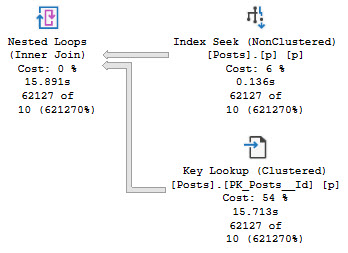
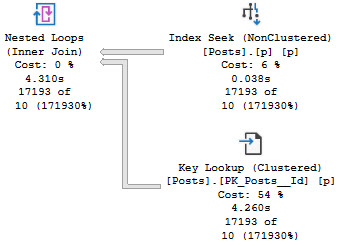
Full demo code is at the end because it’s a bit long, but the end result is five query plans that all share the same bad estimate based off the density vector.
The worst of them looks like this:
And the best of them looks like this:
Over and Over
If you’re getting bad guesses like this over and over again in any loop-driven code, local variables might just be to blame.
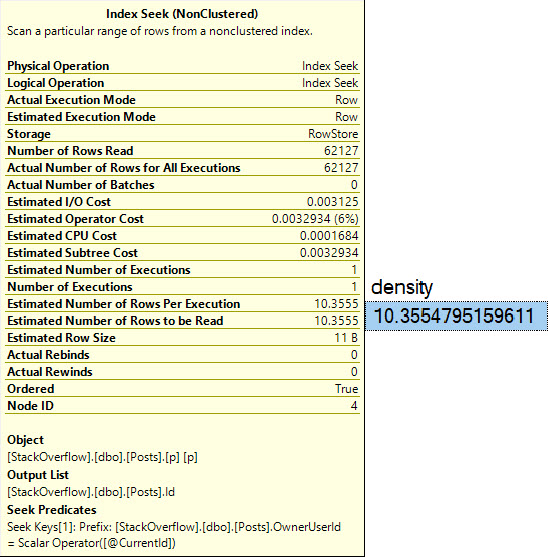
That guess of 10 rows of course comes from this calculation:
SELECT
    density =
        (
            1 /
            CONVERT
            (
                float,
                COUNT(DISTINCT p.OwnerUserId)
            )
        ) *
        COUNT_BIG(*)
FROM Posts AS p
Which, with a little bit of rounding, gets us to the estimate we see in the query plan:
Thanks for reading!
Going Further
If this is the kind of SQL Server stuff you love learning about: these days I have AI do the annoying stuff for me. My new video course teaches you to work the same way, and I teach whole teams in a one-day workshop. Someone still has to know enough SQL Server to keep the robots in check, and that’s what my training is for.
Demo Code
SET STATISTICS XML OFF;
SET NOCOUNT ON;

DECLARE
    @CurrentId int;

DROP TABLE IF EXISTS #UserIds;

CREATE TABLE #UserIds
(
    UserId int PRIMARY KEY CLUSTERED
);

INSERT
    #UserIds WITH(TABLOCK)
(
    UserId
)
SELECT
    u.Id
FROM dbo.Users AS u
WHERE u.Reputation > 850000
ORDER BY u.Reputation DESC;


DECLARE counter CURSOR
    LOCAL STATIC
FOR
SELECT
    UserId
FROM #UserIds;

OPEN counter;

FETCH NEXT FROM counter
    INTO @CurrentId;

WHILE @@FETCH_STATUS = 0
BEGIN

    SET STATISTICS XML ON;

    SELECT
        p.PostTypeId,
        c = COUNT_BIG(*)
    FROM dbo.Posts AS p
    WHERE p.OwnerUserId = @CurrentId
    GROUP BY p.PostTypeId
    ORDER BY c DESC;

    SET STATISTICS XML OFF;

FETCH NEXT FROM counter
    INTO @CurrentId;
END;

CLOSE counter;
DEALLOCATE counter;
Related Posts
- Things SQL Server vNext Should Address: Table Variable Modification Performance
- Things SQL Server vNext Should Address: Local Variable Estimates
- Why Expressions Are Better Than Local Variables For Performance In SQL Server Queries
- Things SQL Server vNext Should Address: Common Table Expression Materialization
One thought on “Local Variables Get Bad Cardinality Estimates In Cursors In SQL Server, Too”
Comments are closed.