Well-Treaded
A lot has been written about dynamic SQL over the years, but I ran into a situation recently where I needed to rewrite some code that needed it with minimal disruption to other parts of a stored procedure.
The goal was to set a bunch of variables equal to column values in a table, but the catch was that some of the values that needed to be set also needed to be passed in as search arguments. Here’s a really simplified example:
DECLARE
    @i int = 4,
    @s nvarchar(MAX) = N'';

SET
    @s += N'
SELECT TOP (1)
    @i = d.database_id
FROM sys.databases AS d
WHERE d.database_id > @i
ORDER BY d.database_id;
'
EXEC sys.sp_executesql
    @s,
  N'@i INT OUTPUT',
    @i OUTPUT;

SELECT
    @i AS input_output;
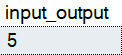
The result is this:
All Points In Between
Since we declare @i outside the dynamic SQL and set it to 4, it’s known to the outer scope.
When we execute the dynamic SQL, we tell it to expect the @i parameter, so we don’t need to declare a separate holder variable inside.
We also tell the dynamic SQL block that we expect to output a new value for @i.
While we’re also passing in @i as a parameter.
Mindblowing.
Thanks for reading!
Going Further
If this is the kind of SQL Server stuff you love learning about, you’ll love my training. Blog readers get 25% off the Everything Bundle — over 100 hours of performance tuning content. Need hands-on help? I offer consulting engagements from targeted investigations to ongoing retainers. Want a quick sanity check before committing to a full engagement? Schedule a call — no commitment required.
Related Posts
- T-SQL Tuesday: Dynamic SQL, The Data Type
- Stored Procedures vs sp_executesql In SQL Server: Is One Better Than The Other?
- SQL Server 2022 Parameter Sensitive Plan Optimization: Does PSP Work With Dynamic SQL?
- SQL Server 2022 Parameter Sensitive Plan Optimization: The Problem With Sniffed Parameter Sensitivity
Sure, but I mean, output parameters are always input parameters too — same with stored procedures 🙂 It’s just pass-by-reference.